“The Origin of the Work of Art” (Der Ursprung des Kunstwerkes) is an essay by Martin Heidegger, written and published in various versions from 1935 to 1960. It was drawn from lectures he gave during the same period.
It’s a rich, layered, and complex essay, and it has something to say about virtually everything pertaining to the philosophy of art and aesthetics – and much more.
One important theme is that art is not limited to aesthetic interests. Artworks are about something. They have what philosophers call intentional content. For Heidegger, that means that they are a source of truth, a way in which the world reveals itself. In fact, they exhibit the nature of truth itself, namely that it is “disclosure.” You might say that works of art disclose disclosure. In other words, they are reflexive: not only are they about something, they are about themselves.
Although Heidegger does discuss works of art such as paintings and poems, his main focus in the essay is on buildings that play an important role in the life of a community: the ancient Greek temples to Apollo, Athena, and Hera at Paestum; the Bamberg Cathedral. These works disclose, in an especially vivid, concrete, and immediate way, the understanding of Being shared by the members of their communities. The Greek temples crystalized the meanings of divinity, mortality, victory, and defeat; the Bamberg Cathedral illuminated the meanings of grace and sin.
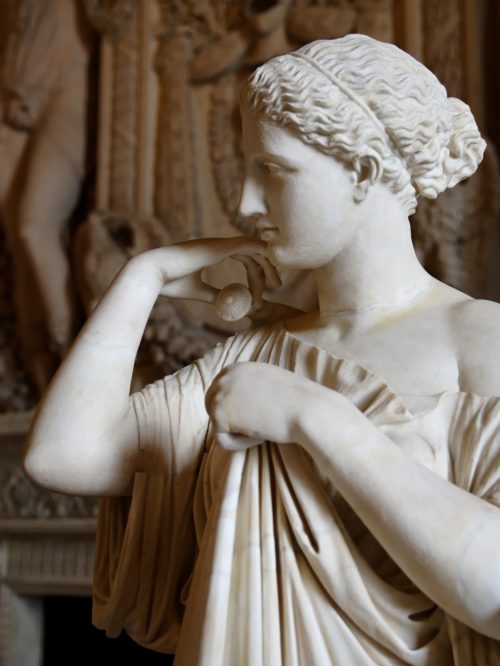
Heidegger points out that the Greek temples no longer “work” – function – as they did in the past, because we don’t share the understanding of Being in terms of which they made sense. Ancient Greek artworks such as the Aegina sculptures in Munich have been “withdrawn” from their world, and we experience them aesthetically, not as disclosers of disclosure.